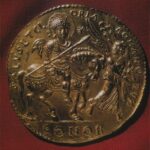


To what extent was Byzantine architecture drawing on its Roman predecessors? Did it evolve smoothly from the Roman architecture becoming what Roman buildings could have been or was it a unique style that drew not on a Roman past but a distinctive Byzantine style? The Byzantine Empire was the inheritor of a glorious past. The Roman Empire at its height was a superpower beyond compare and it has left a legacy in countless areas of Western culture. The true glory of Rome was not won by its armies or written down by its philosophers but was instead built by its engineers and architects. Their armies were defeated and their writings were very nearly lost but their buildings endured. They are marvels of construction that still overawe us some two millennia later but to the people of the Medieval period they were seen as wonders. In England the Anglo-Saxons believed that the works of the Romans were not the works of men but were instead the ruins of buildings build by a race of giants. Eald enta geweorc is the phrase used in the poem “The Wanderer” from the 10th Century to refer to a ruined Roman town but translated that phrase means works of cunning giants. It is easy to forget however that the Roman Empire did not die as we think it did, a whole half of the empire not only survived but flourished in the eastern Mediterranean for centuries after what we think of as the fall of Rome. The Byzantine Empire like the Roman Empire was one with a proud and breathtaking architectural tradition. They built amazing works for the same reasons the Romans did for defence, for religion, and to celebrate the glory of their nation. Like the Romans some of their most impressive works were those we would class as utilitarian, roads, bridges, and aqueducts that made Byzantium, like Rome, the envy of the world.
——— Read Full Text Below ———